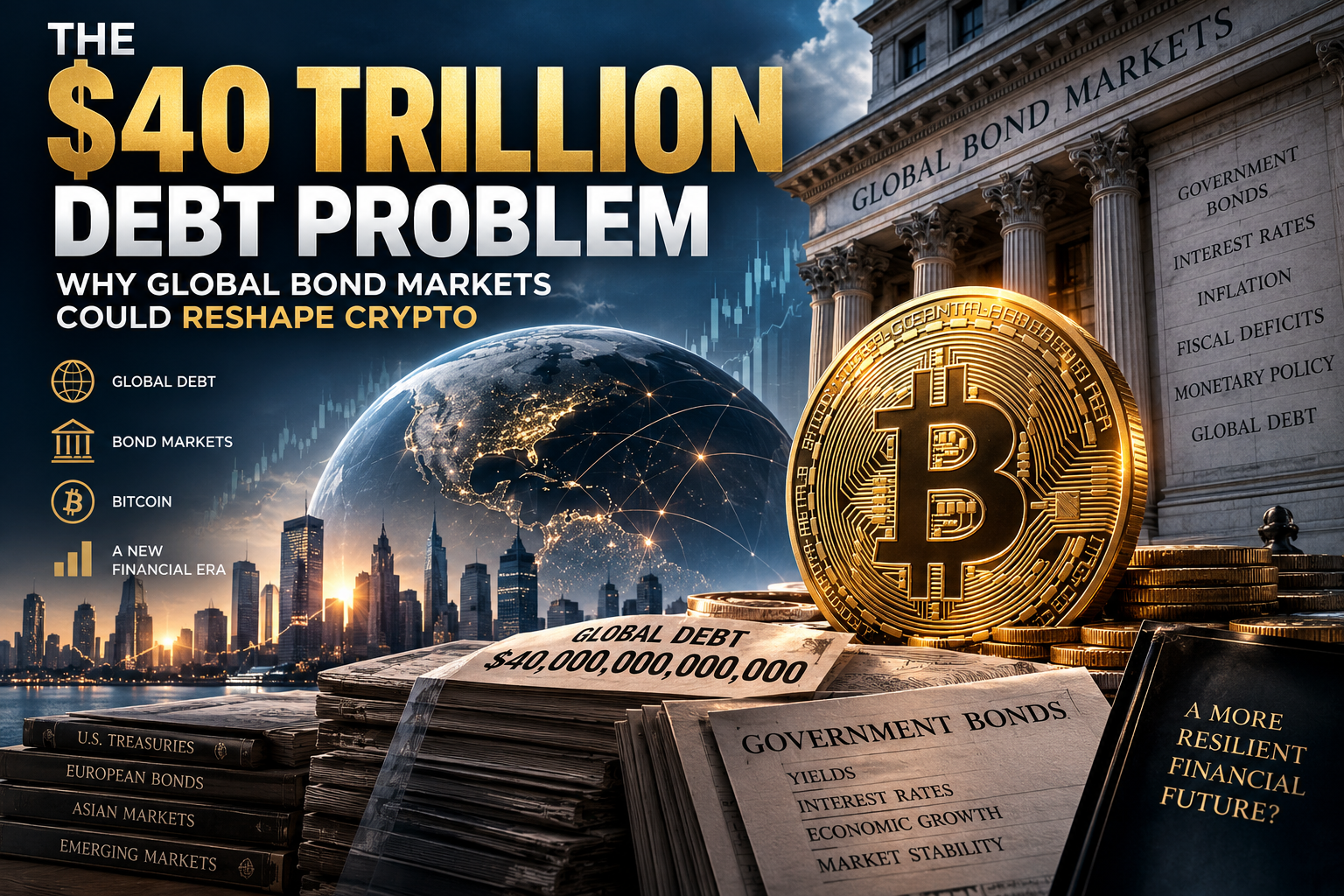
Understanding the $40 Trillion Global Bond Market
The global bond market, currently valued at approximately $40 trillion, is facing unprecedented challenges due to rising interest rates and inflationary pressures. As traditional financial instruments grapple with these issues, investors are increasingly looking for alternative assets, leading to a significant re-evaluation of how cryptocurrencies, particularly Bitcoin, fit into the financial landscape.
The Impact of Rising Interest Rates
Rising interest rates, generally implemented by central banks to combat inflation, have a direct impact on the bond market. When interest rates increase, the prices of existing bonds typically decrease, which can erode investor confidence and lead to greater volatility. This environment can create a ripple effect, prompting investors to seek refuge in alternative assets such as cryptocurrencies.
As noted by the International Monetary Fund (IMF), the current economic climate is forcing traditional investors to reassess their portfolios. The allure of cryptocurrencies as a hedge against inflation has gained traction, particularly Bitcoin, which is often referred to as "digital gold." In this context, the interplay between traditional debt markets and cryptocurrencies is crucial for understanding potential future investment strategies.
Tokenization of Debt Instruments
One of the more innovative developments within this framework is the rise of tokenized debt instruments. By leveraging blockchain technology, these instruments can increase liquidity and transparency in bond markets. Tokenization allows for fractional ownership, which can lower the barrier to entry for investors, making bond investments more accessible to a wider audience. The Bank for International Settlements (BIS) has highlighted how such innovations can reshape the bond market, increasing efficiency while reducing costs.
Moreover, the World Bank has been actively exploring the benefits of digital currencies and how they may integrate with traditional financial systems. As central banks consider launching their own digital currencies (CBDCs), the implications for both the bond market and the cryptocurrency space could be profound. The integration of CBDCs and tokenized bonds may lead to more robust financial products that attract a diverse range of investors.
The Role of Central Banks
Central banks play a pivotal role in shaping the future of both traditional and digital asset markets. As they explore digital currencies, the potential for collaboration between these new forms of money and existing bond structures becomes increasingly apparent. Should central banks opt for digital currencies, it may influence how bond transactions are executed, monitored, and regulated.
For investors already engaged in the cryptocurrency space, these developments present both challenges and opportunities. On one hand, the volatility associated with cryptocurrencies could deter traditional bond investors; on the other, the emergence of hybrid financial products could entice them to explore this new territory.
The Future of Crypto Debt
As the bond market continues to evolve, the relationship between traditional bonds and cryptocurrencies like Bitcoin will likely deepen. The quest for yield amid rising interest rates and inflation may push more investors toward exploring crypto debt and tokenized instruments. The potential for innovation in this space is vast, ranging from decentralized finance (DeFi) products to more sophisticated tokenized bond offerings.
Conclusion: A New Era of Financial Products
In summary, the $40 trillion debt problem is not just a challenge for traditional finance; it presents a unique opportunity for cryptocurrencies to carve out a significant role in the future of investing. As the landscape transforms, we may witness the birth of new financial products that seamlessly blend the traditional bond market with the dynamic world of digital assets. As we move forward, staying informed and adaptable will be crucial for investors looking to navigate this evolving environment.
Key Takeaways - The global bond market is facing significant challenges from rising interest rates and inflation. - Investors are increasingly turning to cryptocurrencies, particularly Bitcoin, as alternative assets. - Tokenized debt instruments leveraging blockchain technology are gaining traction, enhancing liquidity and transparency. - Central banks are exploring digital currencies, which may further influence the bond and cryptocurrency markets. - The interplay between traditional debt markets and digital assets could lead to innovative financial products.
Sources - [International Monetary Fund (IMF)](https://www.imf.org), International Monetary Fund - [Bank for International Settlements (BIS)](https://www.bis.org), Bank for International Settlements - [World Bank](https://www.worldbank.org), World Bank
Laurie's View
Everyone will be focused on Inflation figures to be released.
**Disclaimer:** This content is provided for educational and general informational purposes only and does not constitute personalised financial, investment, legal or tax advice. Views expressed may constitute general commentary or opinion. Digital assets and financial markets involve risk. Readers should conduct their own research and consider obtaining independent professional advice before making financial decisions.